How F1 collaborations put travel retail in pole position
Shelftrak explores how Formula One’s global reach, luxury appeal and growing cultural influence are creating new opportunities for travel retail brands to boost visibility, premiumize products and connect with consumers.
The attraction of F1 partnerships
Within the past decade, Formula One (F1) has shifted from being a well-established yet relatively niche footprint to a cultural phenomenon with a huge global following and significant lifestyle influence. As a result, travel retail brands are racing to engage with the enterprise.
The sport sees continuous annual growth. So far in 2026, race attendance has increased by +6% compared to 2025, with five new circuit attendance records broken, alongside substantial growth in global TV viewership — the Monaco Grand Prix alone reached nearly 80 million viewers. Clearly, the sport is reaching immense heights of popularity. For travel retail brands, this global reach is particularly valuable, as it amplifies visibility to an already international, highly mobile consumer base.
Formula One’s calendar spans every major region, meaning its brand identity travels seamlessly across borders. For travel retail brands, this creates a rare opportunity: a single collaboration can deliver worldwide visibility, consistent storytelling and cross-market relevance across airport locations. As F1 activations can run consistently across regions, travelers recognize them instantly, making the partnership feel familiar wherever they fly.
Commercial opportunities within the Formula One ecosystem are immense. Global sponsorship revenue totals US$3.1 billion, making the industry a multi-billion-dollar commercial powerhouse. Within travel retail specifically, F1 partnerships tap into impulse purchasing, gifting behavior and premiumization through limited editions and collectible formats — something the industry must continue to capitalize on.
This scale and high-value exposure explain why travel retail brands are increasingly motivated to engage with the sport.
Selling a lifestyle, not just a bottle
Not only is Formula One attracting unprecedented global attention, with a global fandom exceeding 800 million people, but it has also transformed into its own luxury lifestyle brand with significant cultural influence. Formula One is now more than a sport — it sells a lifestyle.
It is this combination of global reach, luxury positioning and cultural relevance which makes F1 a desirable collaborator. The nature of Formula One's luxury positioning is particularly appealing to wine and spirit brands, hence the significant increase in collaborations within this sector. These partnerships have emerged because of an alignment between both Formula One and luxury wine and spirit brands’ focus on exclusivity, heritage and glamour, which makes their partnership fitting and strategically advantageous. Therefore, when such brands partner with F1, they gain access to this world of opulence and prestige. The product becomes more than a drink; it becomes a status symbol and entry point into this indulgent lifestyle. It is this lifestyle association that drives desirability and translates into stronger shelf conversion, as travelers are more inclined to buy when the product embodies the aspirational world of F1.
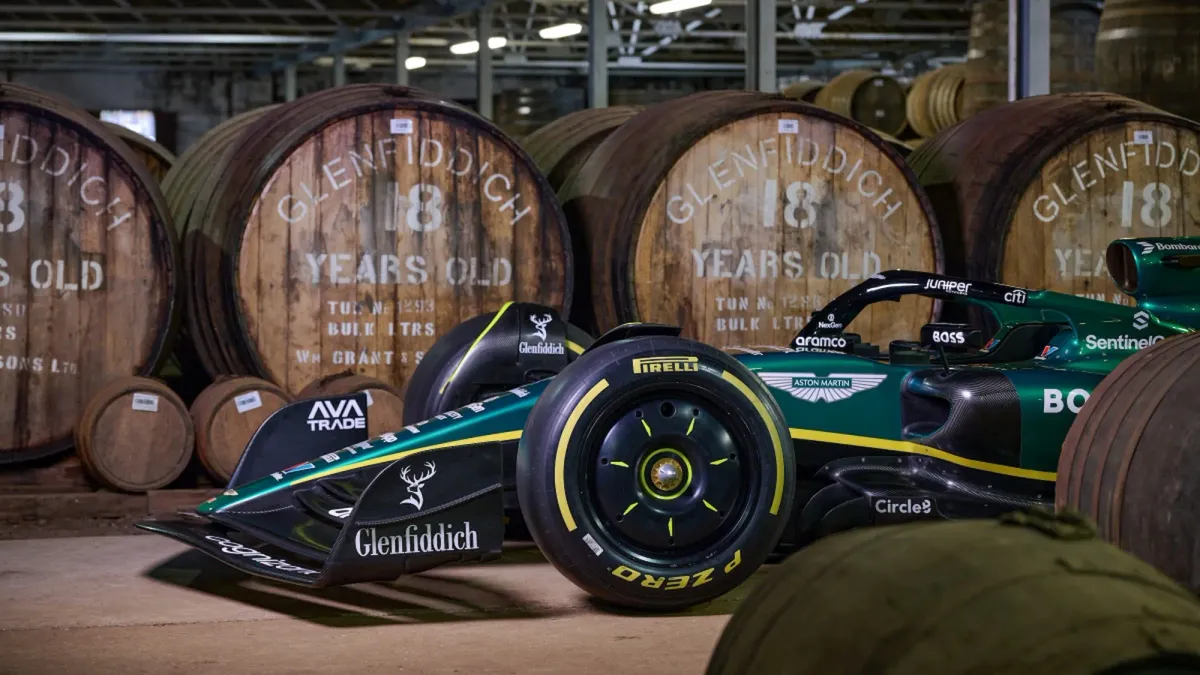
Shelftrak data shows that these F1 collaborations allow brands to position products more competitively by consistently commanding premium pricing. This is a global pattern — not limited to specific airports or shopper profiles. Globally, F1 SKUs usually sit above the price of core SKUs and often significantly. For instance, in London Heathrow, Glenfiddich Aston Martin F1 19YO has a US$27.00 premium compared to the US$103.00 Glenfiddich Vat 04 18YO. Although the F1 edition is a year older, the extent of the premium is significant. The prioritization of brand collaboration premium over other premiums is evidenced by how the Chivas 18YO Gold Signature is US$87.00 (Miami Airport), whereas the Chivas 16YO x LeClerc F1 is US$92.00. Despite the F1 edition being younger and therefore less premium, it is more expensive.
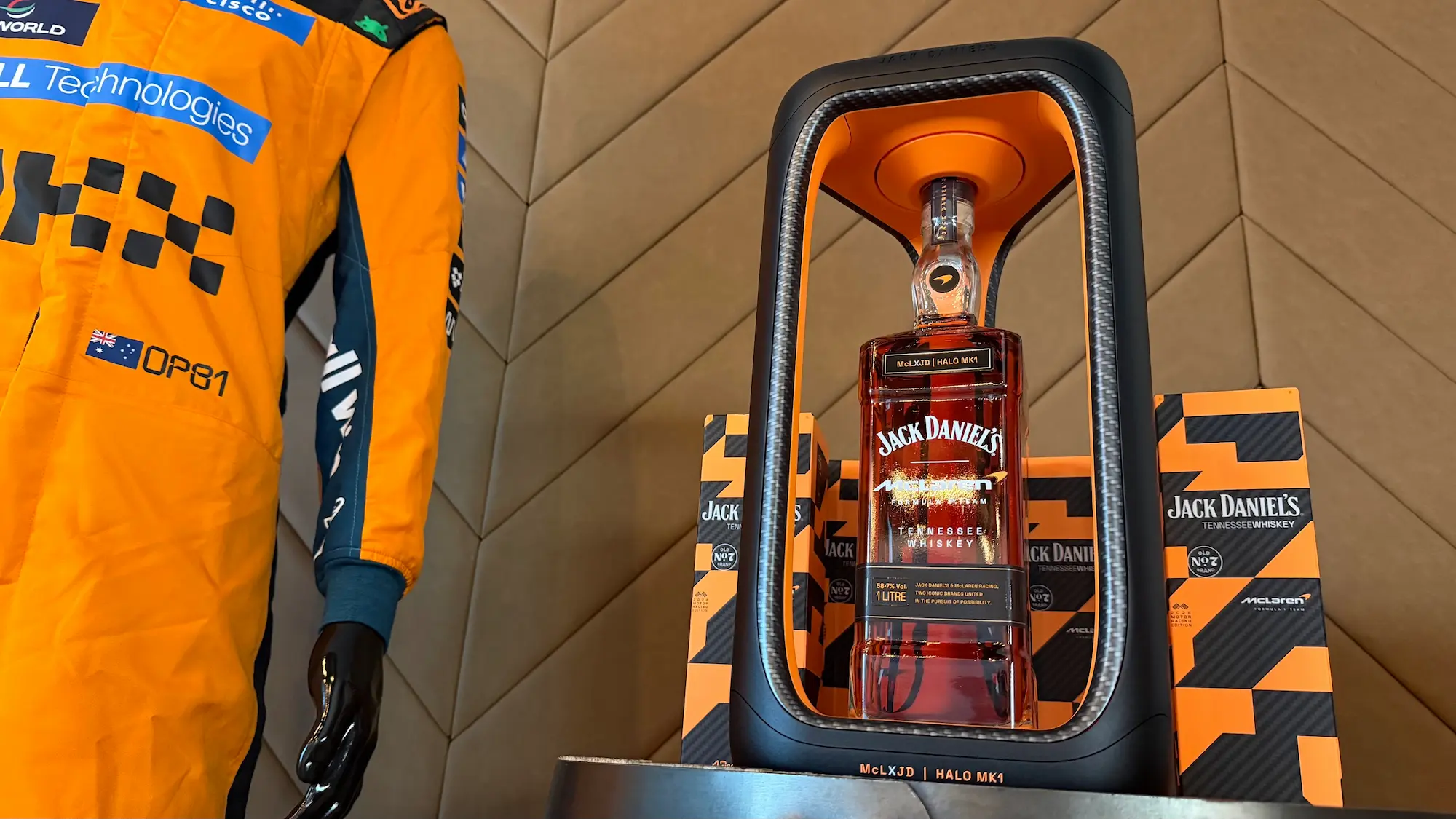
Jack Daniel’s collaborations with McLaren showcase how these partnerships can generate value uplift far beyond standard category pricing, through stretching a brand into ultra-premium territory. This is because, in addition to the McLaren x Jack Daniel's Annual Edition Tennessee Whiskey 1l averaging a premium price of US$41.76 across major airports, the limited-edition Jack Daniel’s Halo Edition’s release is retailing at US$599.99. This demonstrates the extreme upper end of premiumization, clearly showcasing how travellers are willing to spend more to access the aspirational world F1 represents.
How confectionery uses F1 differently
Formula One’s collaboration with Netflix to produce the immensely popular docuseries "Drive to Survive" has also attracted a younger (seen by 19+% year-on-year increase of social media followers) and more diverse audience to the sport. This has transformed the sport’s commercial potential. This younger audience engages with F1 beyond just spectating — they immerse themselves into the fandom through purchasing behaviors to really feel part of the F1 world. As a result, demand for team and driver merchandise has surged. This shift in consumer behavior is a further key reason brands across categories are pursuing partnerships — to attract the younger fans who are not just watching the sport but are buying into it.
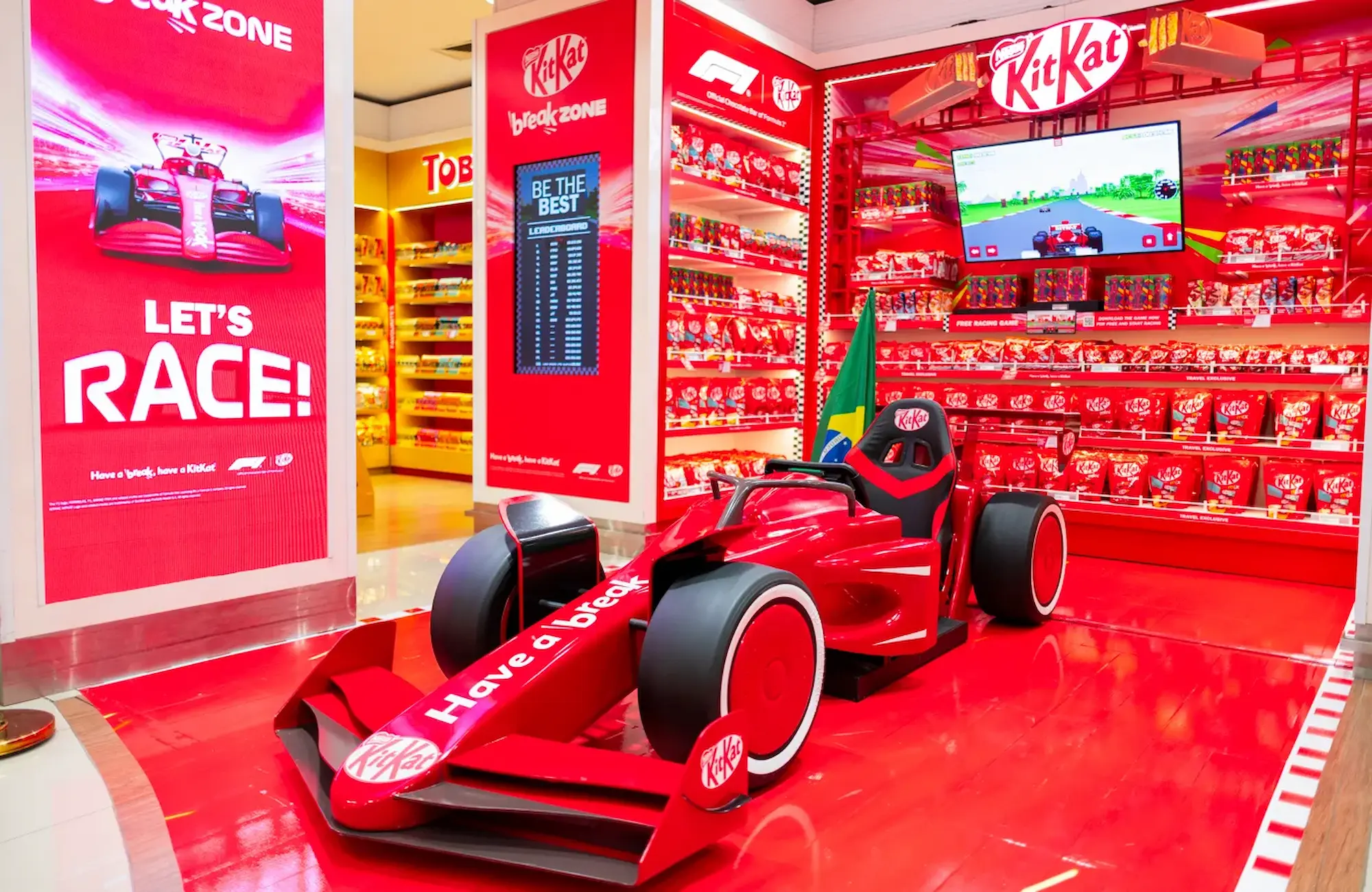
KitKat’s multi-year partnership with Formula One — the first time the sport has held an official chocolate bar partner — offers a blueprint for what confectionery and motorsport partnerships can achieve. Nestlé is capitalizing on F1’s increasingly young and digitally engaged fanbase. Rather than selling luxury, this partnership sells accessible fandom, as they offer younger travelers an affordable way to participate in the sport’s culture.
In recent years, F1 has seen a major demographic shift in its fanbase. Forty three percent of the global fanbase is now under 35 and this younger audience is highly engaged, digitally active and increasingly eager to purchase products reflecting their fandom. This younger audiences’ purchasing behavior favors affordable, impulse-friendly categories. As a result, confectionery caters towards this purchasing behavior and provides younger fans accessible ways to participate in F1 culture.
Nestlé has strategically leveraged the rapid growth of younger F1 audiences to scale its global reach. The company’s multi-year collaboration between KitKat and Formula One — its most expansive global brand partnership to date — capitalizes on F1’s cultural momentum and surging Gen Z fanbase. Within travel retail, KitKat is deliberately targeting younger travelers to promote this collaboration. The brand leverages TikTok fan content and ad placements during Netflix’s Drive to Survive to do so. Additionally, KitKat’s fan zone experiences are providing the immersive, memorable moments which young travel retail shoppers are increasingly demanding. This F1 and KitKat collaboration therefore expertly aligns with young fans’ behavior.
Confectionery is also accessible to younger travelers as a lower cost, impulse-driven category. The F1 partnership with KitKat adds emotional value to the product without adding price pressure, allowing young fans to buy into F1 culture in an affordable way. Retailers appear to recognise this: Shelftrak’s visibility tracking shows KitKat’s F1 SKUs consistently secure premium fixture space in the category.
Shelf space is only one part of the picture. Shelftrak’s category insights also allow brands to understand precisely where F1‑linked SKUs sit within the travel retail value hierarchy. By mapping each product against its category’s entry, mid‑tier, premium and ultra‑premium levels, Shelftrak shows how collaborations shift products upward within the ladder — whether through pricing, placement, or emotional value. This helps brands quantify the commercial uplift of F1 partnerships and identify where additional premiumization opportunities exist across global airports.