The Growth Opportunity Travel Retail is Failing to Execute
Travel Retail Exclusives (TREXs) represent one of travel retail’s most powerful growth engines. They attract high-value shoppers, create genuine differentiation from domestic retail and deliver the sense of discovery travellers actively seek. Despite their significant potential, many exclusives fail to achieve the impact they were designed for. These missed opportunities are because of poor execution at shelf level.
The Strategic Promise of Travel Retail Exclusives
Travel retail needs exclusives. It needs products that create excitement and give shoppers a reason to engage. They are inherently valuable to the industry.
Travel Retail Exclusives provide products travellers cannot buy at home so offer something domestic retail cannot. As a result, they evoke feelings of discovery, exclusivity and emotional value. This creates excitement and encourages browsing, gifting and trade-up. TREXs uniquely have this growth potential across categories. An exclusive single malt would have the same impact as an exclusive chocolate gifting box – both would command attention as feel distinctive and special.
These exclusives also attract the shoppers travel retail benefits most from engaging. TREX shoppers are younger, more affluent and more engaged than the average duty-free shopper. Latest m1nd-set research found that they are more open to influence, willing to spend and try products for the first time. This means they are not passive shoppers drifting aimlessly through stores. They are engaged customers actively looking for products which feel different and unique.

TREXs promise growth. So, is the industry executing them well enough to unlock that growth?
The Execution Gap: Why TREXs Often Fail to Deliver
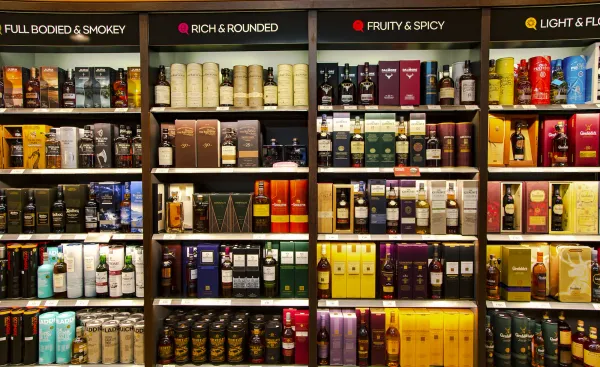
The industry celebrates TREX launches but routinely fails to execute them at shelf level. These exclusives are only commercially powerful when the shopper can see them, understand them and therefore, feel motivated to buy them. The industry often fails to do this. Travel retail’s most valuable shoppers actively seek products they cannot find elsewhere yet many exclusives are given such poor visibility that even the most engaged travellers struggle to find them. This is because too many TREXs are squeezed into crowded fixtures, given minimal facings and launched with unclear propositions. This is blatant execution failure.
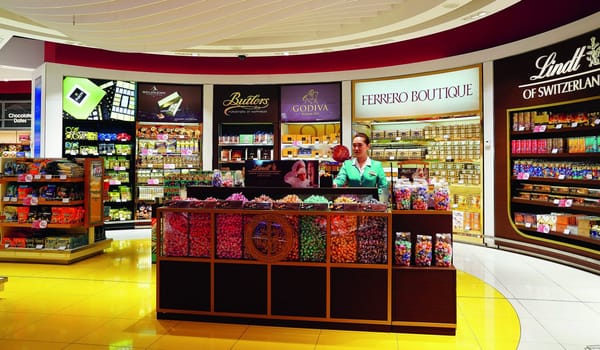
Shelftrak’s data repeatedly shows that distribution without visibility does not convert. Within alcohol categories, a product can be strategically important and beautifully conceived but if it receives limited space on a crowded shelf with no clear communication, it will fail to stand out. Data shows how this occurs across categories. In confectionary, too many exclusives appear with little differentiation at shelf level. This unfairly leaves shoppers the responsibility to decode whether something is genuinely exclusive or simply another version of a familiar product in a different pack. If shoppers are unable to immediately understand why the product matters, the value is lost.
The Loss of Existing SKUs
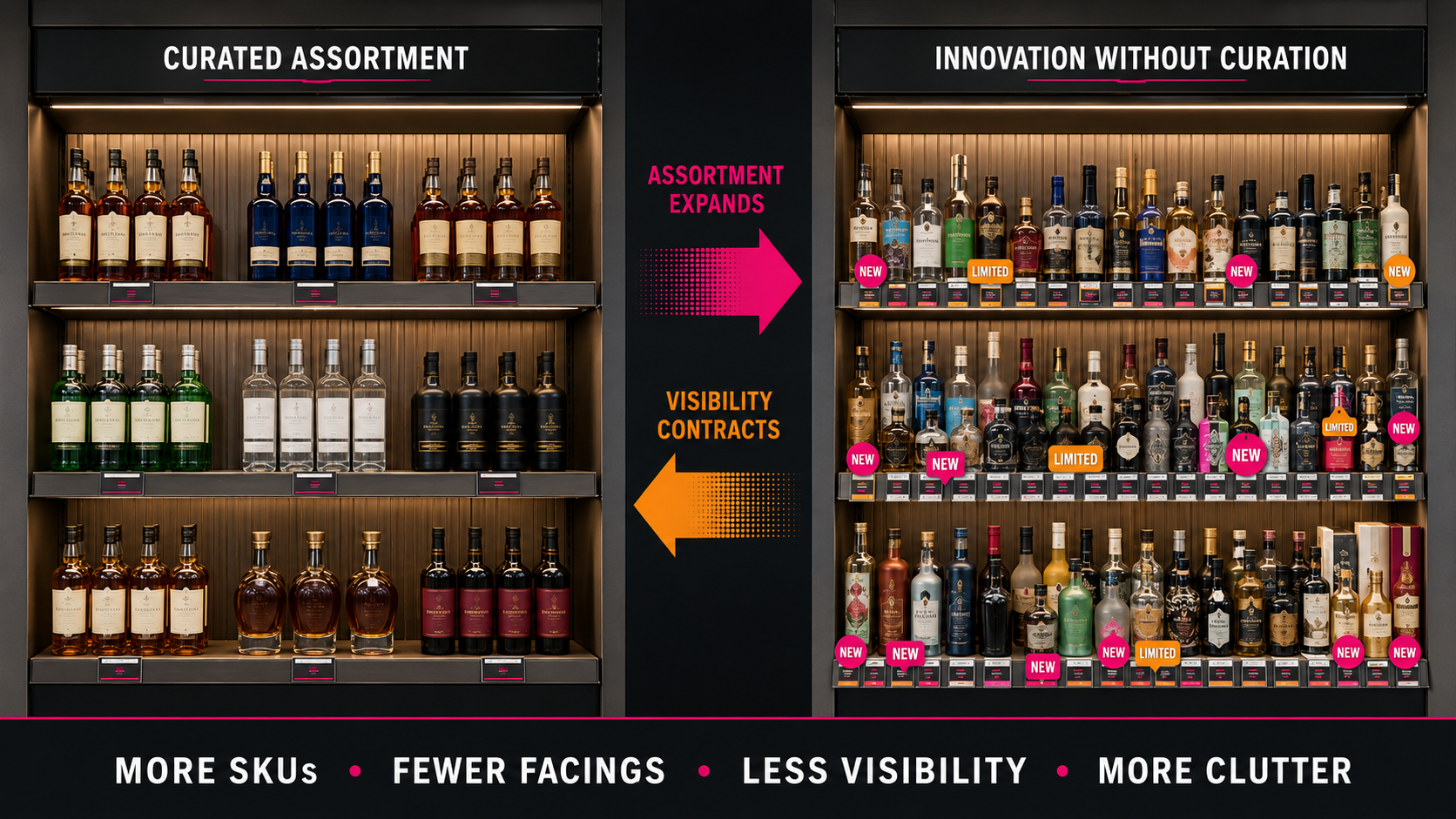
Every new SKU must fit into a fixed shelf footprint. Too often, when TREXs arrive, an existing SKU loses visibility. This results in new products being squeezed into existing fixtures, which reduces facings, clutters shelves and complicates product stories. Shoppers are therefore left to navigate a confusing wall of increasingly similar choices – which is immensely off-putting.
Shelftrak helps brands understand how exclusives impact the wider category and which SKUs should be protected and challenged. This prevents brands from suffering from the “One In, One Out” trap. Retailers often manage space by removing one SKU for every new one added. Whilst this may feel logical, it is unwise. The shelf belongs to shoppers, not supplies. If a genuinely strong innovation enters the category, the focus shouldn’t be on which product from the same supplier must disappear. The focus should be on which SKU across the entire category contributes least to shopper value and commercial performance. Suppliers should not be forced to remove a strong-performing product simply because it has launched something new, whilst weaker competitor SKUs remain untouched. Such decisions must be made intelligently and with expert guidance.
Shelftrak’s Evidence: Why Execution Determines TREX Success
Shelftrak’s global data shows a simple truth – TREX success is determined by shelf execution. Shelftrak recently tracked sixteen significant alcohol launches across ninety-two major travel retail stores globally. This tracking revealed how dramatically visibility, distribution and share of space shape commercial outcomes.
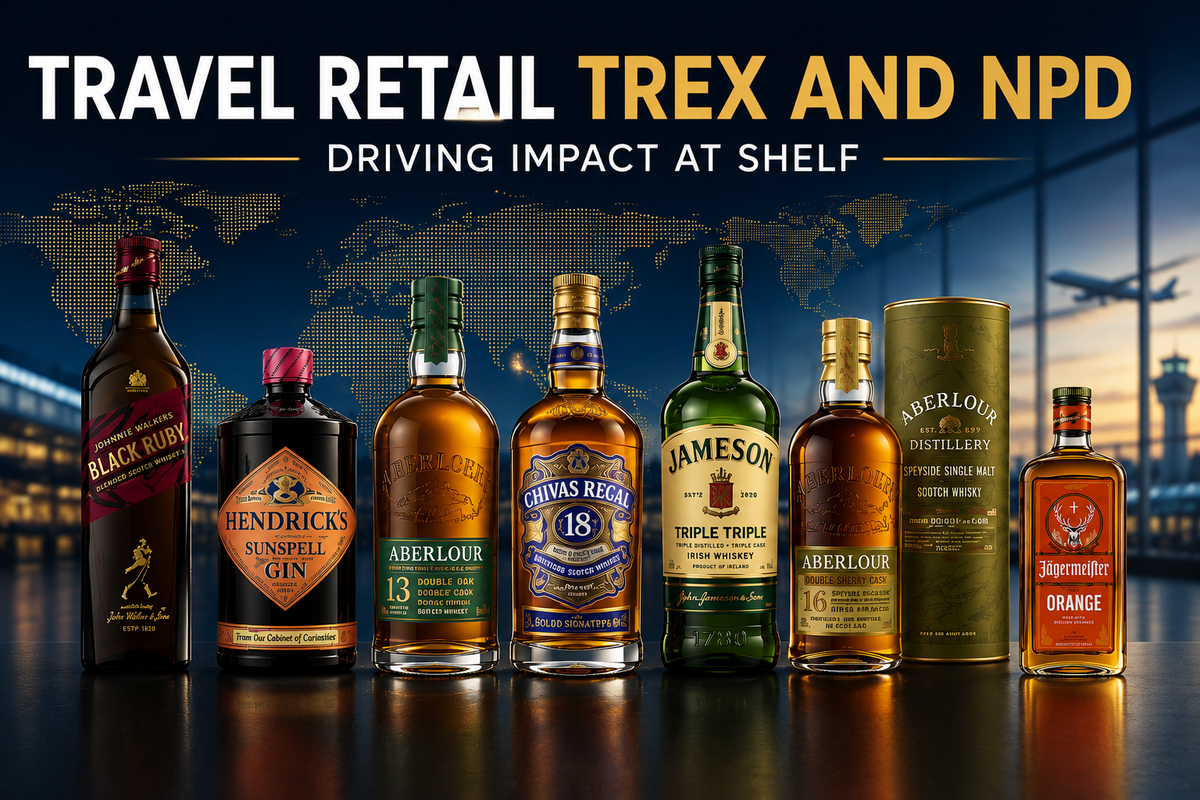
Somes launches were executed appropriately. Johnnie Walker Black Ruby reached 88% of monitored stores, appearing in every IMEA store, almost 94% of European stores, 83% of Asian stores and 75% of stores in the Americas. Hendrick’s Sunspell Gin also performed strongly, achieving 80+% global distribution, with particularly strong execution in Europe. Aberlour 13-Year-Old Distillery Speyside Single Malt reached over 70% global distribution, while Chivas Regal 18-Year-Old Ultimate Cask Collection Pauillac Wine Cask reached 64%. These launches were not just theoretical innovations. They had the retail footprint required to give them a genuine chance of success.
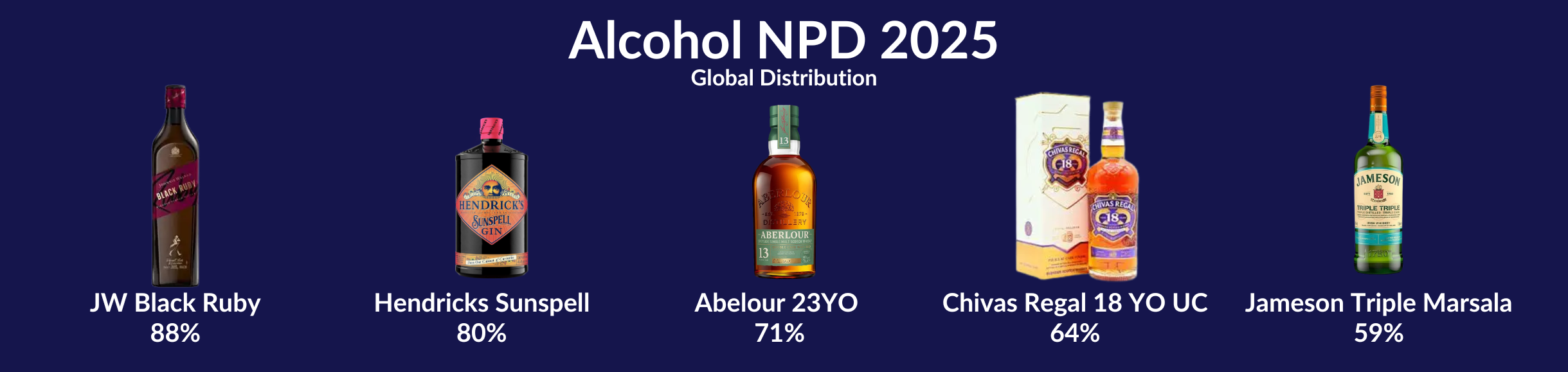
By contrast, several other launches failed to achieve the distribution required for commercial traction, appearing in too few stores to be discovered by travellers. For instance, The Lakes Distillery Boundless appeared in fewer than one in ten monitored stores globally. In addition, the Glen Grant Exploration range was largely concentrated in Asia – limiting its global reach. The success of these products is prevented by their poor distribution. The same execution dynamic is present within confectionary. Distribution consistently separates launches that gain traction from those that quietly disappear.
Shelftrak’s Insight: Visibility is Key
Whilst distribution is vital, it doesn’t determine success. A product can be listed widely and still fail to make an impact if it does not receive meaningful visibility.
Shelftrak’s data shows how a product can be listed almost everywhere and still fail commercially, if it isn’t visible. Listing a product is not the same as landing it in the shopper’s mind. The exclusives that are successful don’t just get listed – they get room. For instance, Hendrick’s Sunspell did not just achieve strong distribution, it also secured meaningful share of space within gin. Johnnie Walker Black Ruby achieved broad distribution and a strong share of space within blended Scotch. These products were visible enough to communicate their proposition, which resulted in success. The necessity of visibility is strongly demonstrated by Jägermeister Orange. Although its global distribution was lower than some other whisky launches, it benefitted from strong visibility and a clear proposition. It felt genuinely different while still being unmistakably connected to the parent brand. This showcases how it is not always a numbers game – quality of presence is more important.
Good visibility is essential because shoppers respond to what is immediately visible, clear and compelling. They do not study shelves or calculate range architecture; they pay attention to what is clearly explained to them. Presence without impact is a wasted opportunity. This same problem applies outside spirits. A travel-exclusive gifting range can secure listings across major airports, but unless shoppers instantly recognise its exclusivity and understand why it deserves attention over an established name, its commercial potential is lost.
Put simply, distribution creates the opportunity, but visibility converts the opportunity into sales.
Sales Are Up. But Up from Where?
Travel retail loves a launch success story. It’s a pattern we are all familiar with - a new product arrives, sales are reported, listings are celebrated and the launch is declared a success. But rarely is the question asked: where did those sales actually come from?
Did the product recruit new shoppers into the category? Did it encourage existing shoppers to spend more? Did it pull value in from a competitor brand? Or did it simply transfer sales from another SKU within the same portfolio? This distinction matters enormously and travel retail rarely interrogates it.
A launch can look successful in isolation while doing very little for the brand as a whole. For instance, a new whisky expression may simply be cannibalising its own core line, or a confectionery gifting format may just be diverting spend from an existing listing rather than growing the category. This is why launch success cannot be judged on sales volume alone. Until brands ask that question as rigorously as they celebrate the headline number, travel retail will keep mistaking movement for growth.
Execution Before Results
The industry often measures launches too late. It waits for sales results and then tries to explain success or failure after the event. By that point, the biggest execution decisions have already been made. Launch windows are short and momentum matters. If execution is poor in the first few weeks, the opportunity may be lost before the product has had a fair chance.
Perfect Store thinking turns that approach on its head. Instead of asking whether a launch sold, it asks whether the conditions for success were created in the first place. Was the product properly distributed, visible, compliant and supported in the way originally agreed? Was it in the right stores, on the right fixture, with the right number of facings, the right pricing and the right communication? These questions may sound basic. That is precisely the point. Too many launches fail because the basics are not consistently delivered. A brand can invest heavily in product development, packaging and activation, and a retailer can agree to list the product — but if execution in-store is weak, the shopper never experiences the launch as intended. The product may be there, but it is not truly launched.
Success therefore depends not simply on achieving distribution, but on securing visibility and disciplined execution from day one. The future of Travel Retail Exclusives will not be decided in product development meetings. It will be decided on the shelf.